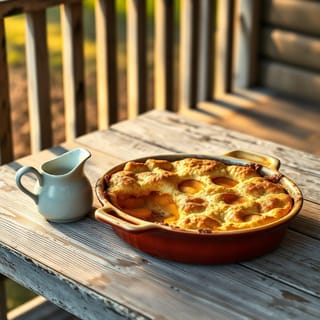
The Sunday Gratin Dauphinois Rule: No Cheese, No Arguments
Potatoes, cream, garlic and time, and why my family refuses to let anyone add Gruyère.


There are many rules in my family, most of them unspoken. One of them is spoken often and loudly: a gratin dauphinois does not have cheese in it. If you put cheese in it, it is a different dish, and you can call it whatever you like, but not that.
My uncle, who married into the family from Savoie, tried to add Gruyère once in 1998. It is still mentioned at Christmas.
What a gratin dauphinois really is
The dish comes from the Dauphiné, the old province around Grenoble, not far from Lyon. In its simplest form it is just thinly sliced potatoes baked slowly in cream and milk with garlic, salt, pepper and a little nutmeg, until the top is golden and the inside is soft and almost melting.
The cheese question is a real debate in France. Many restaurants add it. Many cookbooks include it as an option. But in my family, the gratin is about the potato and the cream becoming one thing. Cheese makes it heavy and stringy and hides the potato. That is the argument, anyway. I suspect it is also about Savoie.
The potatoes
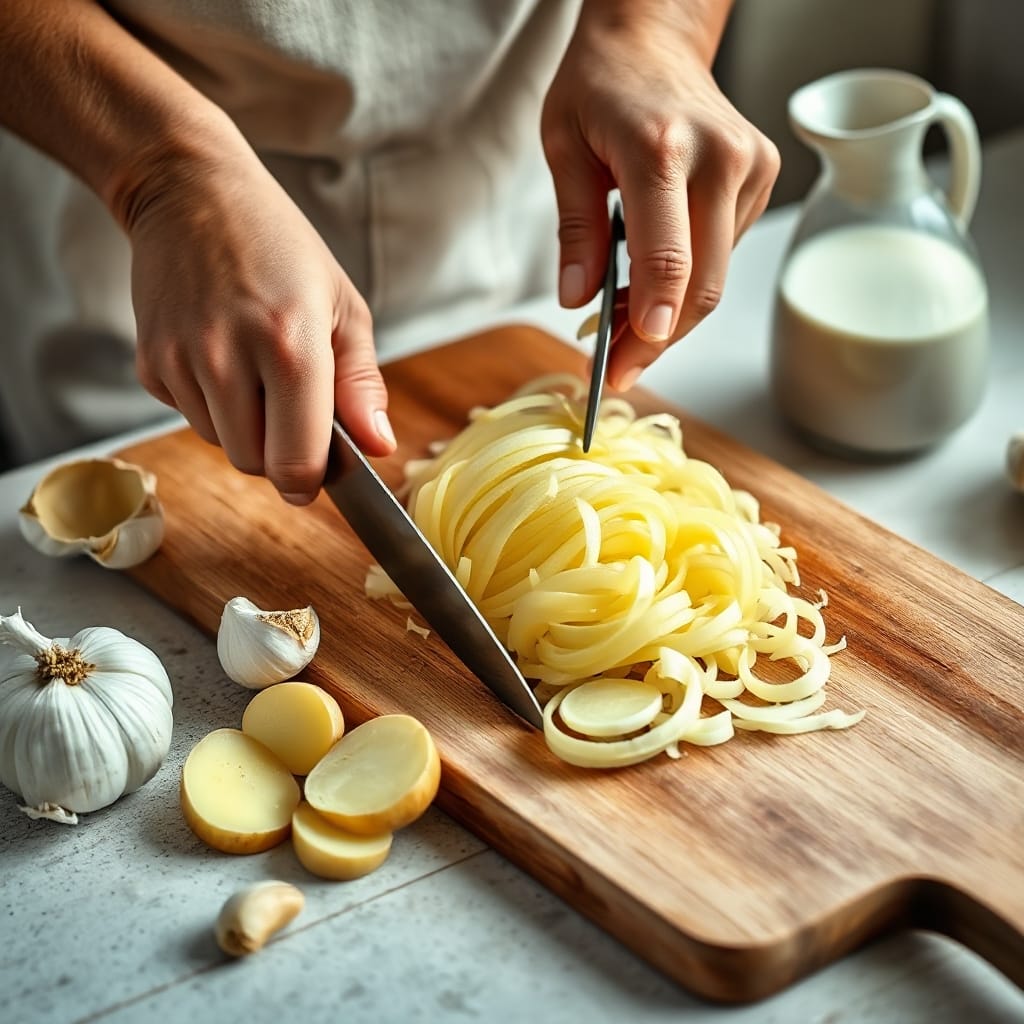
The choice of potato matters more than anything. You need a waxy variety with a bit of starch, one that holds its slices but releases enough starch to thicken the cream. My mother buys them from the same stall at the Croix-Rousse market every Saturday morning, from a farmer who has known her for thirty years and who always asks, "For the gratin?"
The most important rule, after the cheese: do not rinse the slices. The starch on them is what makes the sauce.

How I make it
For six people:
- Peel about 1.2 kilos of potatoes and slice them about three millimetres thick. A mandoline is fastest, but my mother uses a knife and is faster than me with a mandoline.
- Rub a gratin dish with a cut clove of garlic, then with plenty of butter.
- In a large pan, heat 500 millilitres of whole milk and 300 millilitres of cream with two crushed cloves of garlic, salt, pepper and some freshly grated nutmeg.
- Add the potato slices to the pan and simmer gently for about ten minutes, stirring carefully so they do not stick. The liquid will start to thicken.
- Pour everything into the dish, arrange the top layer neatly if you care about that, and dot with a little more butter.
- Bake at 160 degrees for about an hour and a half, until the top is deep golden and a knife slides in with no resistance at all.
The low temperature and long time are the secret. Rushing it at high heat gives you curdled cream and hard potatoes.
Sunday lunch
In my family, the gratin is served with a roast chicken or a leg of lamb on Sundays, and it is always the first dish to be finished. The crispy corners are fought over. My father claims the right to scrape the edges of the dish with a spoon, a right he says he inherited from his own father.
My uncle's revenge
Last Christmas, my uncle made his own gratin, with Gruyère, and brought it to the family lunch as a joke. Everyone pretended to be offended. Then everyone ate it. It was very good.
Nobody has said a word about it since. But I noticed that in January, my mother bought some Gruyère, for no reason she would explain.