I Tracked Every Hour of My Week for 90 Days. The Numbers Embarrassed Me.
A logistics planner turns his own spreadsheet habit on himself and finds eleven hours a week he could not explain.


I plan truck routes for a living. Every day I look at a schedule and ask where the minutes are leaking: a driver waiting forty minutes at a loading dock, a detour nobody questioned, a pallet that sits for a shift because the paperwork was late. Last January, after a colleague joked that I could optimise anything except my own evenings, I decided to point the same tools at myself.
The rules were simple. Every hour of every day, from 6 a.m. to midnight, went into one column of a spreadsheet with a single word: work, sleep, cycle, kids, cook, read, phone, chores, or "unknown". I kept it for 90 days. I expected to feel organised. Mostly I felt caught.
The column I did not want to fill in
The word "unknown" was meant for the odd hour I forgot to log. By week three it had become the third largest category after sleep and work. On average I had eleven hours a week that I could not account for, and when I forced myself to reconstruct them, nearly all of it was the phone: news, a cycling forum, the same three group chats, checking whether a parcel had moved.
What embarrassed me was not the total. It was the pattern. The unknown hours clustered between 8:30 and 10 p.m., exactly the window I had been telling my wife was "the only time I have to read". I had not read a full book since the summer.
What the data actually changed
I did not throw my phone in a canal. I changed three small things and kept logging to see if they mattered.
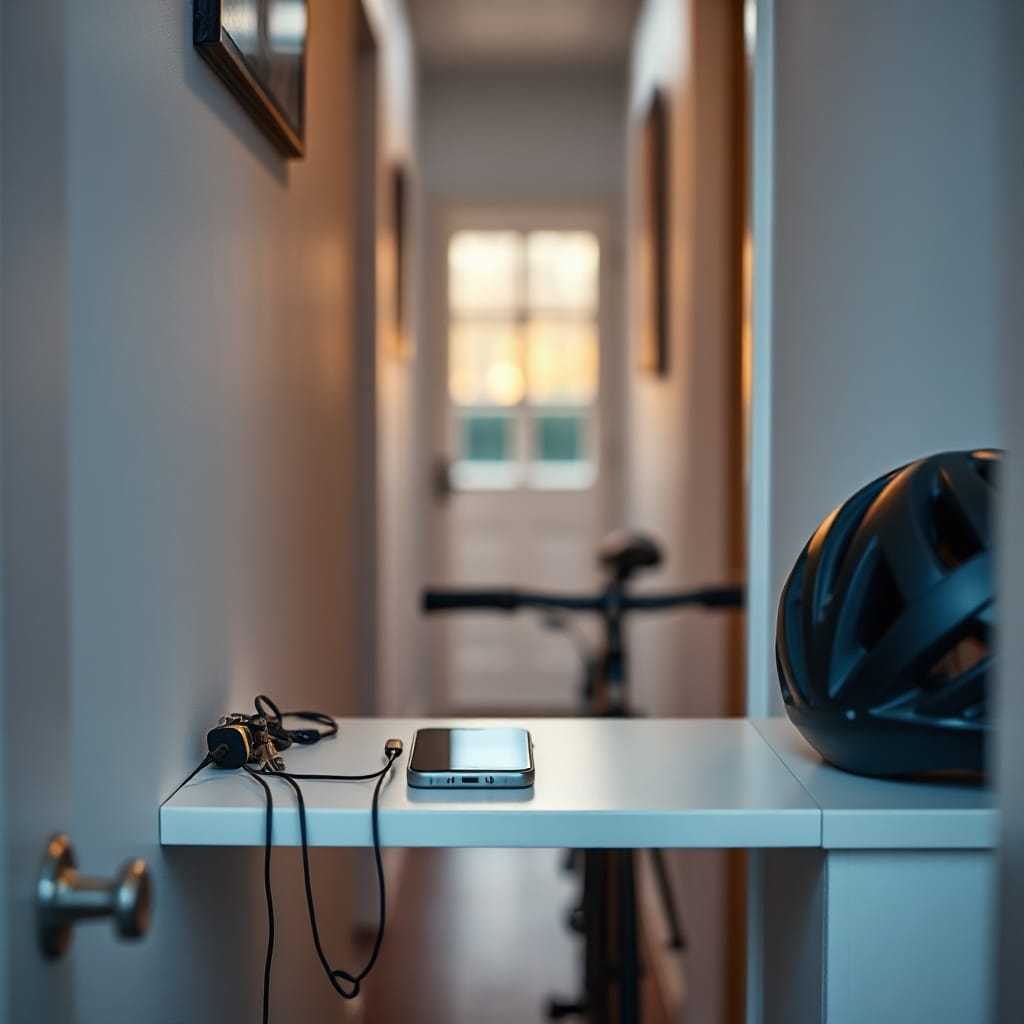
- The phone now charges in the hallway, next to the bike keys, from 8 p.m.
- I put the book I was reading on my pillow every morning, so I had to move it to get into bed.
- I gave Tuesday and Thursday evenings a label in advance: "workshop" in the shed, where there is no signal anyway.
By week eight the unknown column had dropped to about four hours a week. Reading went from zero to roughly five. I finished six books by the end of the experiment, which is not impressive to anyone but me.

The parts the spreadsheet could not see
There were limits. The log flattened everything into hours, and an hour with my daughter doing homework is not the same as an hour of her ignoring me while I sit nearby. Some weeks the numbers looked good and I still felt scattered. Other weeks I had plenty of unknown time and felt rested, because the scrolling had been on a train next to a window and not in bed.
I also noticed that tracking itself had a cost. Around day 60 I caught myself choosing activities because they would look good in the spreadsheet. That is the same trap I warn junior planners about: when a number becomes the goal, people start feeding the number.
Why I stopped at 90 days
I ended the log on a Sunday in April and have not restarted it. I do a lighter version now: once a month I write down, from memory, what my last Tuesday looked like. If I cannot remember the evening, that tells me enough.
The lesson was not that I need more discipline. It was that my sense of my own time was simply wrong, by about eleven hours a week, and I would never have believed that without seeing it in my own handwriting. Most of us are confident about where our days go. I would gently suggest checking.