I Kept Stats for Our Rec League for a Full Season. The Numbers Surprised Me
Tracking every shot, rebound and turnover across 60 games of youth basketball changed how I coach.

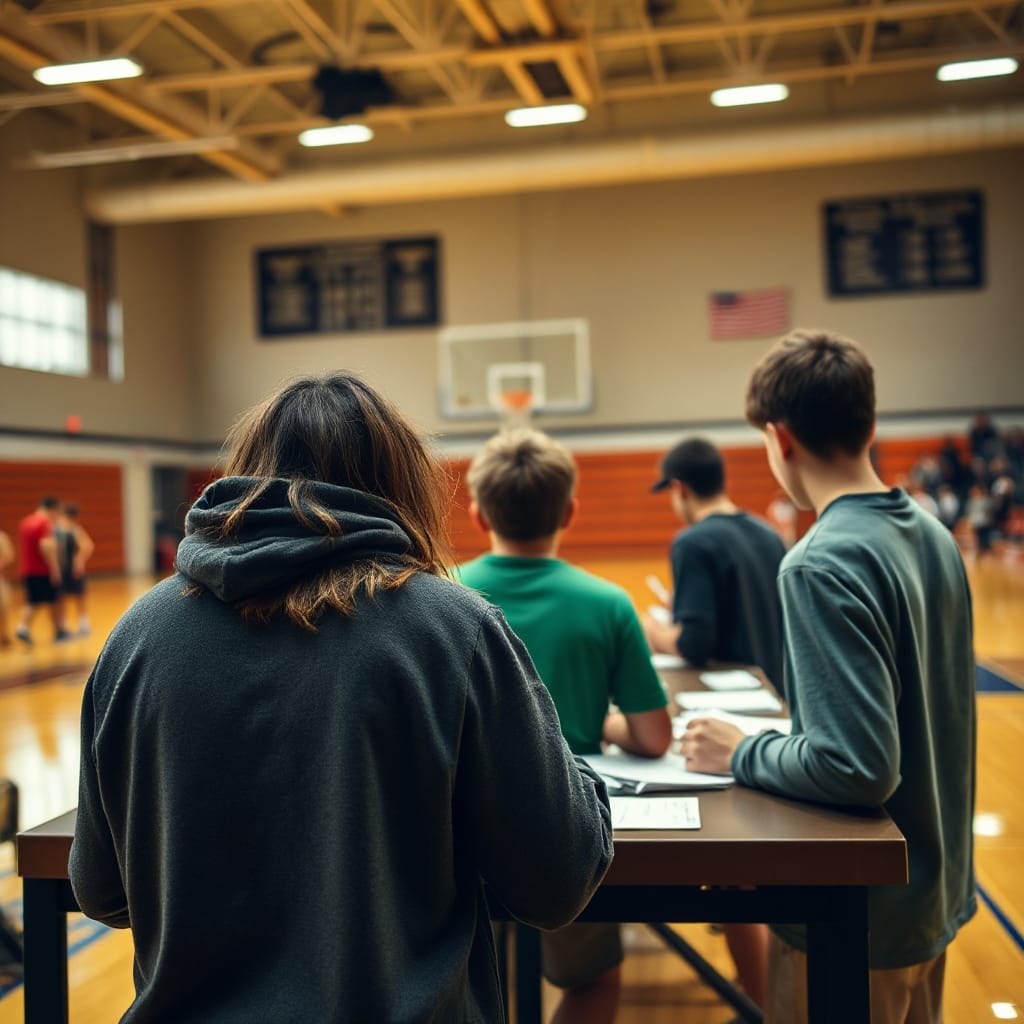
I am a civics teacher by profession, and maybe that is why I believe in evidence. Two seasons ago I decided to test my coaching assumptions by tracking statistics for every game in our 12-and-under rec league. I recruited my daughter, then 15, and two of her friends, and paid them in pizza.
Over one season we tracked 60 games, roughly 2,400 shots and more turnovers than I want to remember. Here is what we found.
Turnovers decide more games than shooting
The biggest predictor of who won was not shooting percentage. It was turnovers. In games where one team had at least eight fewer turnovers than the other, that team won about 85 percent of the time in our data.
This makes sense at this age. Twelve-year-olds shoot poorly overall. Our league average from the field was around 29 percent. So the team that simply got more chances to shoot, by not throwing the ball away, usually came out ahead.

Layups are worth more than anything else
Shots close to the basket went in about 45 percent of the time. Shots from mid-range, between about eight feet and the three-point line, went in around 21 percent. Threes went in about 14 percent.
That means a three-pointer, at this age, was worth on average about 0.42 points per shot, while a layup was worth around 0.9. Yet many kids, inspired by what they see on television, kept pulling up from deep. The data gave me a way to explain to them, without lecturing, why driving to the basket mattered.
Free throws are a hidden gap
Teams that practiced free throws regularly hit around 50 percent. Teams that did not hit around 35. Over a season that difference added up to several close games. It is the cheapest skill to practice, and almost nobody does it seriously.
What did not matter as much as I thought
- Height. Taller kids rebounded more, but teams with one tall player did not win more than average.
- Full-court pressing. It caused turnovers, but also gave up a lot of easy layups when it failed.
- Number of plays a coach had. The most successful coach in our league ran exactly two.
How it changed my coaching
I now spend the first 15 minutes of every practice on ball handling and passing under pressure. We end every practice with free throws, each kid shooting ten, tracked on a sheet on the wall. And we talk about shot selection using the numbers, with the players calculating points per shot themselves. Sneaking a little math into basketball practice was a bonus I did not plan.
Our turnovers dropped by about a third the next season. We won more games. More importantly, the kids understood why.
My daughter, by the way, now wants to study statistics. She says it is because of the project. I suspect it is partly the pizza.