What Actually Happens Inside Your Lungs When You Breathe Air at Minus 20
Your airways are remarkably good at warming cold air, until you ask them to do it at race pace.

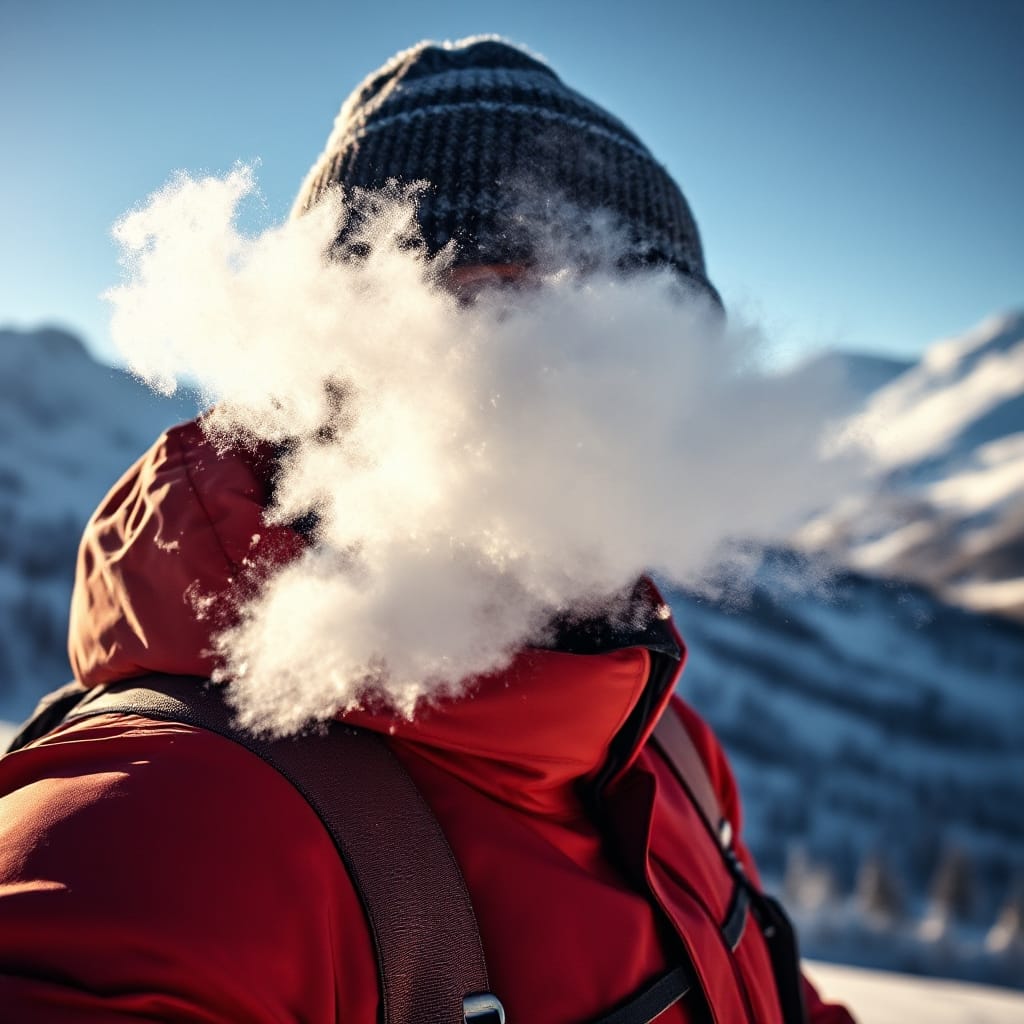
Every winter, patients ask me the same question: is it dangerous to exercise in very cold weather? Usually they mean their lungs. They have heard that cold air can "freeze" the lungs, or that skiers cough blood. The truth is more interesting and less dramatic.
Your lungs never actually meet air at minus 20. By the time air reaches the small airways deep in your chest, it has been warmed almost to body temperature and is close to fully saturated with water vapour. The question is what that warming costs.
Your nose is a radiator
When you breathe calmly through your nose, the air passes over the turbinates, folded bony structures lined with a mucous membrane full of blood vessels. They act like a heat exchanger. Air that enters at minus 20 can leave the nasal cavity at around 25 to 30 degrees and very humid.
The membrane loses heat and water in the process, which is why your nose runs in the cold. That drip is partly condensation: warm, moist air from your lungs cools on the way out and leaves water behind.
The problem starts with mouth breathing
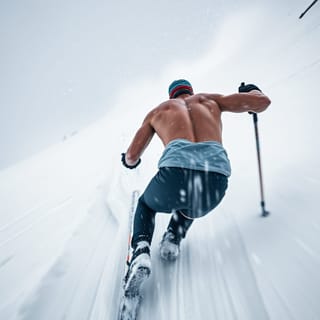
During hard exercise you breathe through your mouth, and the volume rises dramatically. A resting adult moves about 6 to 8 litres of air per minute. An endurance athlete at full effort can move over 100 litres. The mouth is a much worse heat exchanger than the nose, so cold, dry air penetrates deeper into the airways before it is fully conditioned.
To warm and humidify all that air, the lining of the airways gives up water. Repeated over hours, this can dry and irritate the airway surface. In some people, this triggers a narrowing of the airways called exercise-induced bronchoconstriction. It is common among cross-country skiers, with some studies finding it in a large share of elite athletes.
So is it dangerous?
For most healthy people, exercising at minus 20 is safe. Your airways are irritated, you cough afterwards, and that is mostly it. But there are sensible precautions:
- Reduce intensity on very cold days, since volume of air is the main driver of the stress.
- Use a buff or a heat-exchange mask over the mouth, which traps some warmth and moisture from your exhaled breath.
- Warm up indoors or gradually, rather than starting a hard interval straight from a warm car.
- If you cough for hours after training or feel tightness in the chest, ask a doctor about testing for bronchoconstriction.
What the coughing means
The persistent cough many skiers get after a cold race is usually a sign of airway irritation rather than damage. The lining recovers within a day or two. Repeated over many seasons, though, there is evidence it can contribute to longer-term problems, which is why racing federations have temperature limits for events. At my local club we cancel interval sessions below minus 15. The children complain. Their lungs do not.